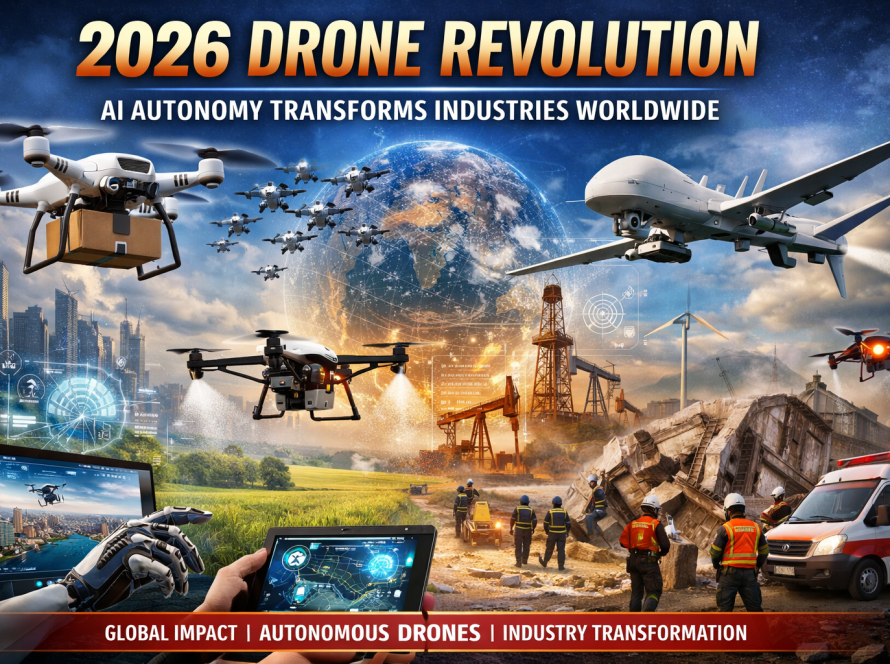


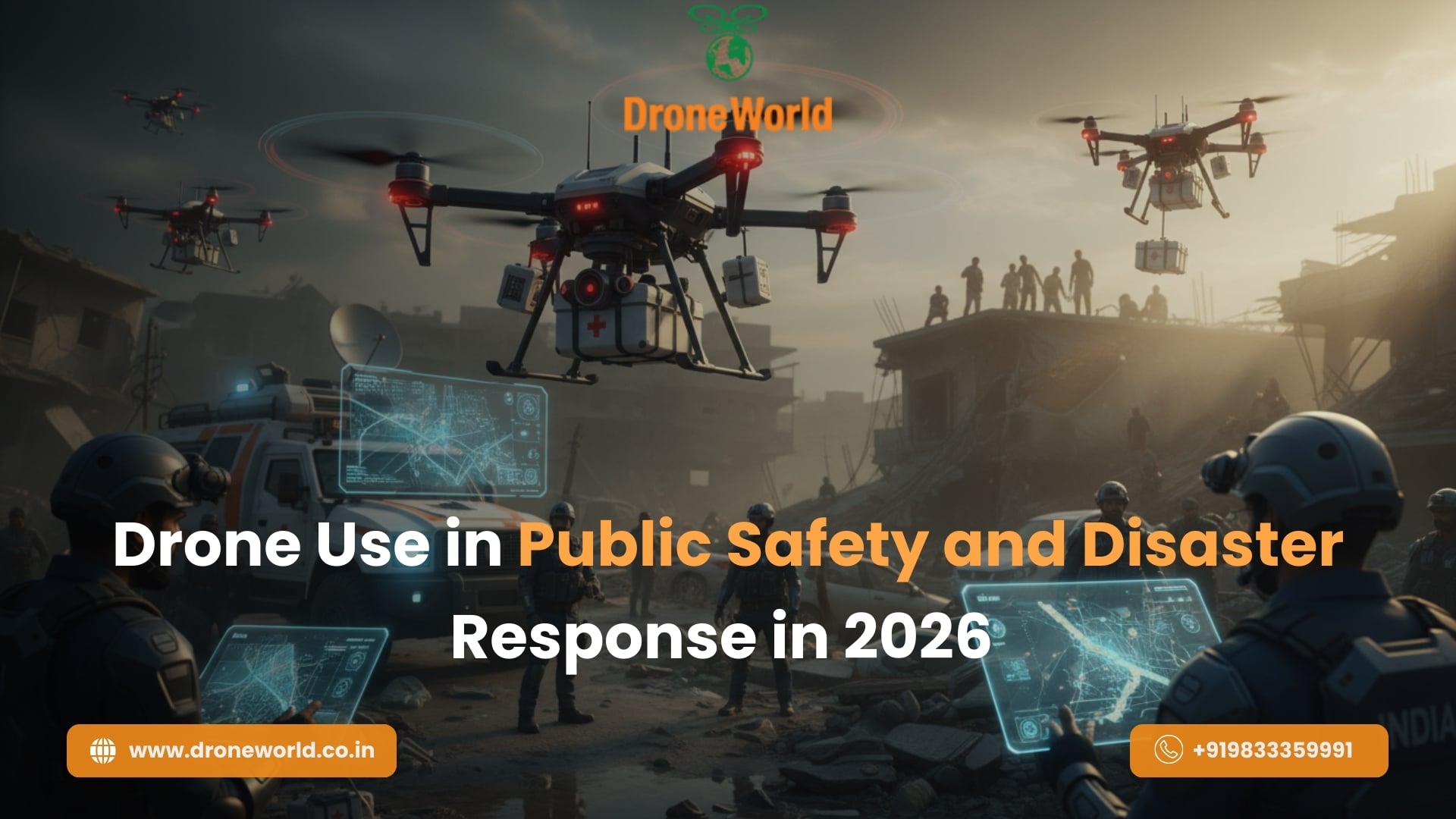
In 2026, drones have become a core tool in public safety and disaster response worldwide. From locating missing persons to assessing disaster damage in real time, unmanned aerial systems (UAS) now enable faster, safer, and more informed decision-making for authorities.
With advancements in AI, sensors, and autonomous flight, drones are transforming how governments and emergency teams respond to crises.
Quick Overview: How Drones Support Public Safety
- Rapid situational awareness during emergencies
- Safer operations without risking human responders
- Real-time data for faster decision-making
- Cost-effective monitoring and response
- AI-powered analytics for prediction and coordination
These capabilities make drones indispensable for modern disaster management.
What Is the Role of Drones in Public Safety and Disaster Response?
Drones in public safety are used for surveillance, assessment, search and rescue, communication support, and logistics during emergencies. Unlike traditional methods, drones can reach inaccessible or dangerous areas within minutes.
Key Capabilities
- High-resolution aerial imaging
- Thermal and infrared sensing
- Live video transmission
- AI-based object and anomaly detection
- Autonomous and beyond-visual-line-of-sight (BVLOS) operations
How Drones Are Used in Disaster Response Operations
Search and Rescue Missions
Thermal cameras mounted on drones help locate survivors trapped under debris or lost in forests, especially during floods, earthquakes, and landslides.
Damage Assessment & Mapping
Drones quickly generate aerial maps and 3D models of affected areas, helping authorities prioritize rescue and relief operations.
Emergency Communication Support
In regions where infrastructure is damaged, drones can act as temporary communication relays, restoring connectivity for responders.
Delivery of Emergency Supplies
Medical kits, blood samples, vaccines, and essential supplies can be delivered via drones to remote or cut-off locations.
AI-Powered Drones: Smarter, Faster, Safer
By 2026, AI has significantly enhanced drone effectiveness in public safety.
Automated Pattern Recognition
AI algorithms detect:
- Human movement
- Fire spread
- Structural damage
- Flood levels
Predictive Disaster Response
AI-enabled drones assist in:
- Flood prediction
- Wildfire spread analysis
- Crowd behavior monitoring
This enables proactive response rather than reactive action.
Applications Across Public Safety Agencies
Law Enforcement
- Crowd monitoring during large events
- Crime scene documentation
- Border and coastal surveillance
Fire & Rescue Departments
- Wildfire monitoring
- Structural fire assessment
- Hotspot detection
Disaster Management Authorities
- Flood and cyclone impact analysis
- Earthquake damage mapping
- Evacuation planning
Healthcare & Humanitarian Aid
- Medical supply delivery
- Post-disaster health surveillance
Challenges in Public Safety Drone Deployment
- Limited battery life in long operations
- Weather constraints
- Skilled pilot and analyst shortages
- Integration with existing emergency systems
Best practices include standardized training, interoperable platforms, and AI-assisted automation.
The Future of Drones in Public Safety
Autonomous Emergency Drones
Self-deploying drones triggered by sensors or alerts.
Swarm Technology
Multiple drones coordinating to cover large disaster zones.
Integration with Smart Cities
Drones connected with IoT, emergency dashboards, and AI command centers.
By 2026 and beyond, drones are evolving from support tools into critical infrastructure for public safety.
Get your first piloting trial lesson for free!
Conclusion
As drones become essential tools for public safety and disaster response, their effectiveness depends on skilled, regulation-ready professionals. Proper training ensures safe operations, accurate data capture, and compliance with aviation standards. In this evolving ecosystem, DGCA-approved drone training institutes in Mumbai, such as DroneWorld, play an important role in preparing pilots to support emergency services, government missions, and future public safety initiatives across India.