

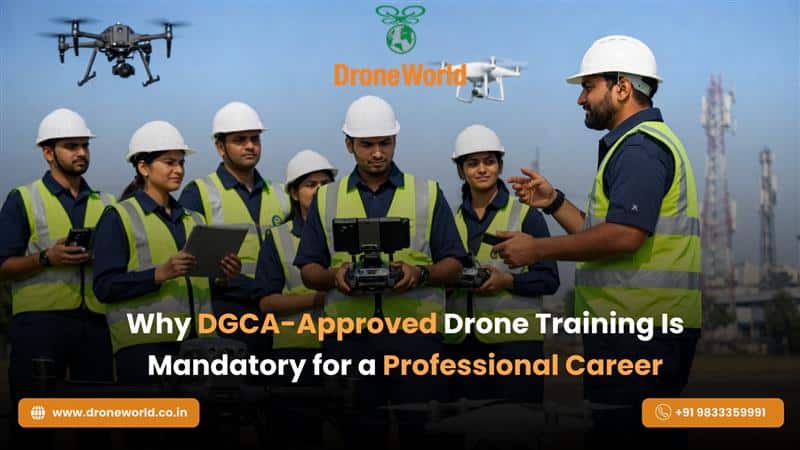
The drone industry in India is soaring. From aerial surveying and agriculture to infrastructure monitoring, defense applications, logistics, and media production, drones have become indispensable tools across sectors. With this rapid growth, the demand for skilled and certified drone professionals has skyrocketed. But in India, skills alone aren’t enough DGCA-approved drone training is mandatory for anyone looking to turn their passion for flying drones into a professional career.
Introduction: The Rising Demand for Certified Drone Professionals
The Indian drone ecosystem is witnessing unprecedented expansion, backed by stringent regulations from the Directorate General of Civil Aviation (DGCA). While technical expertise is essential, legal compliance and certification have become equally critical. Professional drone pilots need proper training not just to fly drones but to ensure safety, follow regulations, and access high-value opportunities.
What Is DGCA & Its Role in India’s Drone Ecosystem
The DGCA (Directorate General of Civil Aviation) is India’s governing body for civil aviation, tasked with ensuring airspace safety, issuing drone pilot licenses, and approving Remote Pilot Training Organisations (RPTOs). DGCA approval is the highest recognition a drone training institute can achieve, making it the gold standard for professional training in India.
DGCA ensures that pilots are trained under standardized curricula and follow safety norms, which is critical for both commercial and governmental drone operations.
What Is DGCA-Approved Drone Training?
A DGCA-approved RPTO (Remote Pilot Training Organisation) offers structured training designed to meet regulatory requirements. The curriculum covers:
- Air regulations and drone laws
- Meteorology and weather considerations
- Navigation and flight planning
- Flight operations, safety, and emergency procedures
- Hands-on flying hours with certified instructors
This structured approach ensures that aspiring pilots are not only skilled but also fully compliant with India’s drone regulations.
Why DGCA-Approved Training Is Mandatory for a Professional Career
a) Legal Compliance & Licensing
DGCA certification is mandatory to obtain:
- Remote Pilot Certificate
- Drone license for commercial flying
Flying without DGCA-approved training and certification can lead to legal penalties, fines, and the grounding of drones.
b) Eligibility for High-Paying & Government Projects
Many government tenders, PSUs, defense contracts, and smart city projects require pilots to hold DGCA certification. Without it, professional opportunities in these high-value sectors remain inaccessible.
c) Employer & Client Trust
Companies prefer hiring DGCA-certified pilots because the certification demonstrates:
- Verified skills
- Awareness of safety protocols
- Regulatory compliance
This trust translates into better job offers and higher credibility.
d) Insurance & Risk Coverage
Insurance providers often require DGCA certification before providing coverage for drones. Certified pilots reduce operational and legal risks, ensuring both the pilot and employer are protected.
Career Opportunities After DGCA-Approved Drone Training
DGCA certification opens doors to a variety of professional roles, including:
- Drone surveyor (land and infrastructure)
- Aerial photographer & cinematographer
- Agricultural drone operator
- GIS & mapping professional
- Industrial inspection pilot
- Defense & government drone operator
- Drone instructor & trainer
DGCA Drone Pilot Eligibility & Training Requirements
To enroll in DGCA-certified drone training, aspirants must meet certain requirements:
- Minimum age criteria
- Educational qualifications
- Medical fitness
- Background verification
- Familiarity with different types of drones (small, medium, etc.)
Risks of Non-DGCA or Fake Drone Training Institutes
Training with non-approved institutes may seem cheaper, but it carries significant risks:
- No legal flying permissions
- Lack of job acceptance by companies or government projects
- Risk of blacklisting by authorities
- Financial losses and wasted time
- Potential safety hazards during operations
How to Choose the Right DGCA-Approved Drone Training Institute
When selecting a drone training institute in India, consider:
- Verification of RPTO approval on the DGCA website
- Experienced and certified instructors
- Extensive hands-on flying exposure
- Post-training career guidance and placement support
- Industry tie-ups and practical exposure
Institutions like DroneWorld, known for DGCA-compliant programs, combine structured learning with practical flying experience, helping bridge the gap between certification and real-world career opportunities.
Have questions? Get in touch!
Conclusion
In India’s rapidly growing drone industry, DGCA-approved drone training is not optional it is essential. Certification ensures legal compliance, career credibility, and access to high-paying opportunities across government and private sectors. Aspiring drone professionals should choose institutes that follow DGCA standards, provide practical exposure, and prepare pilots for real-world challenges.
For those serious about a professional drone career, enrolling in a DGCA-approved training program is the first step toward taking to the skies safely and successfully.