

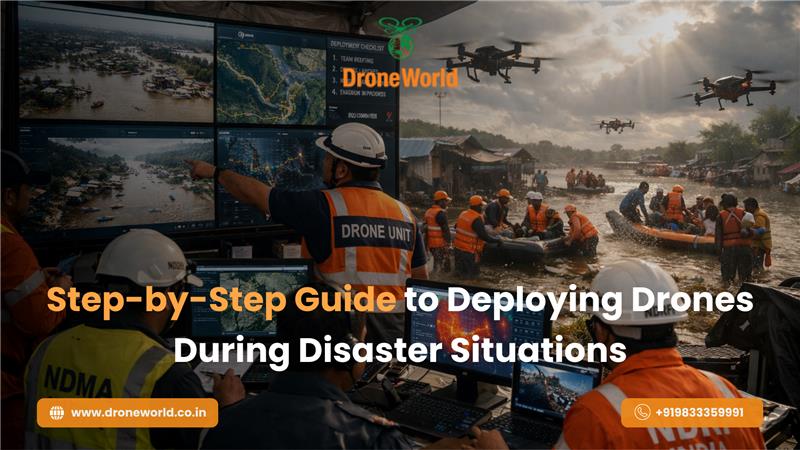
When disaster strikes, every second matters. Traditional ground-based response methods often struggle due to damaged infrastructure, blocked roads, or unsafe conditions. This is where drones in disaster management play a crucial role providing real-time aerial insights, faster response, and safer operations.
This guide explains how drones are deployed during disaster situations, step by step, in a practical and easy-to-understand way.
Why Drones Are Essential During Disasters
Drones allow emergency teams to quickly assess affected areas without putting human lives at risk. Equipped with high-resolution cameras, thermal sensors, and GPS systems, drones can:
- Monitor large disaster zones in minutes
- Locate trapped or injured individuals
- Support search and rescue teams
- Assist in damage assessment and relief planning
Their ability to fly into inaccessible or dangerous locations makes them invaluable during floods, earthquakes, fires, and cyclones.
Step 1: Assess the Disaster and Define Objectives
Before deploying a drone, responders must understand:
- The type of disaster (flood, earthquake, wildfire, etc.)
- The affected area and severity
- The primary mission objective (surveillance, rescue, mapping)
Clear objectives ensure drones collect useful, actionable data, not just visuals.
Step 2: Select the Right Drone and Equipment
Not all drones are suitable for disaster response. Choosing the right platform depends on:
- Flight endurance and stability
- Weather resistance
- Payload capacity
Common payloads include thermal cameras for detecting survivors, HD cameras for live monitoring, and mapping sensors for post-disaster analysis.
Step 3: Follow Regulatory and Safety Guidelines
Even during emergencies, drone operations must follow aviation regulations. This includes:
- Obtaining necessary permissions from local authorities
- Operating within approved airspace
- Avoiding interference with rescue helicopters or aircraft
Trained pilots play a critical role in ensuring safe and lawful drone deployment.
Step 4: Deploy Drones for Real-Time Monitoring
Once airborne, drones provide live video feeds and aerial data to command centers. This helps teams:
- Identify blocked routes
- Locate survivors
- Detect hazards like fires or gas leaks
Real-time insights significantly improve coordination and response speed.
Step 5: Support Search, Rescue, and Relief Operations
Drones equipped with thermal sensors can detect body heat, even in low-visibility conditions. They can also assist in:
- Guiding rescue teams to exact locations
- Delivering small medical supplies
- Monitoring ongoing rescue operations
This reduces response time and increases survival chances.
Step 6: Conduct Post-Disaster Damage Assessment
After the immediate response, drones help in:
- Mapping damaged infrastructure
- Evaluating property loss
- Supporting insurance and government assessments
Accurate aerial data enables better recovery planning.
Why Training Matters in Disaster Drone Operations
Advanced drone technology alone is not enough. Disaster response requires skilled pilots who understand emergency scenarios, aviation safety, and regulatory compliance. Proper training ensures drones are used responsibly, efficiently, and without creating additional risks.
Institutes like Drone World, which provides professional drone training in Mumbai, help prepare pilots with hands-on experience and operational knowledge required for real-world disaster situations.
Conclusion
Drone deployment during disaster situations has become a game-changer in modern emergency response. From rapid assessment to life-saving rescue support, drones enable faster, safer, and smarter decision-making. As disaster management systems continue to evolve, the importance of trained operators and reliable drone technology will only grow making professional training and preparedness essential for effective disaster response.
FAQ’s
Drones are used for real-time aerial surveillance, search and rescue operations, damage assessment, and monitoring high-risk or inaccessible areas. They help emergency teams respond faster and make data-driven decisions during disasters.
Multirotor drones are best for search and rescue due to their stability and maneuverability, while fixed-wing drones are suitable for large-area mapping. Drones with thermal cameras, GPS, and long flight endurance are most effective in disaster management.
Yes, trained and certified pilots are required to operate drones during disaster situations. They must understand aviation regulations, safety protocols, and emergency operations to ensure effective and risk-free deployment.
To operate drones for disaster management, enrolling in a professional drone training program is essential. Drone World in Mumbai provides structured drone training focused on real-world operations, safety standards, and regulatory compliance, helping pilots prepare for emergency response scenarios.