

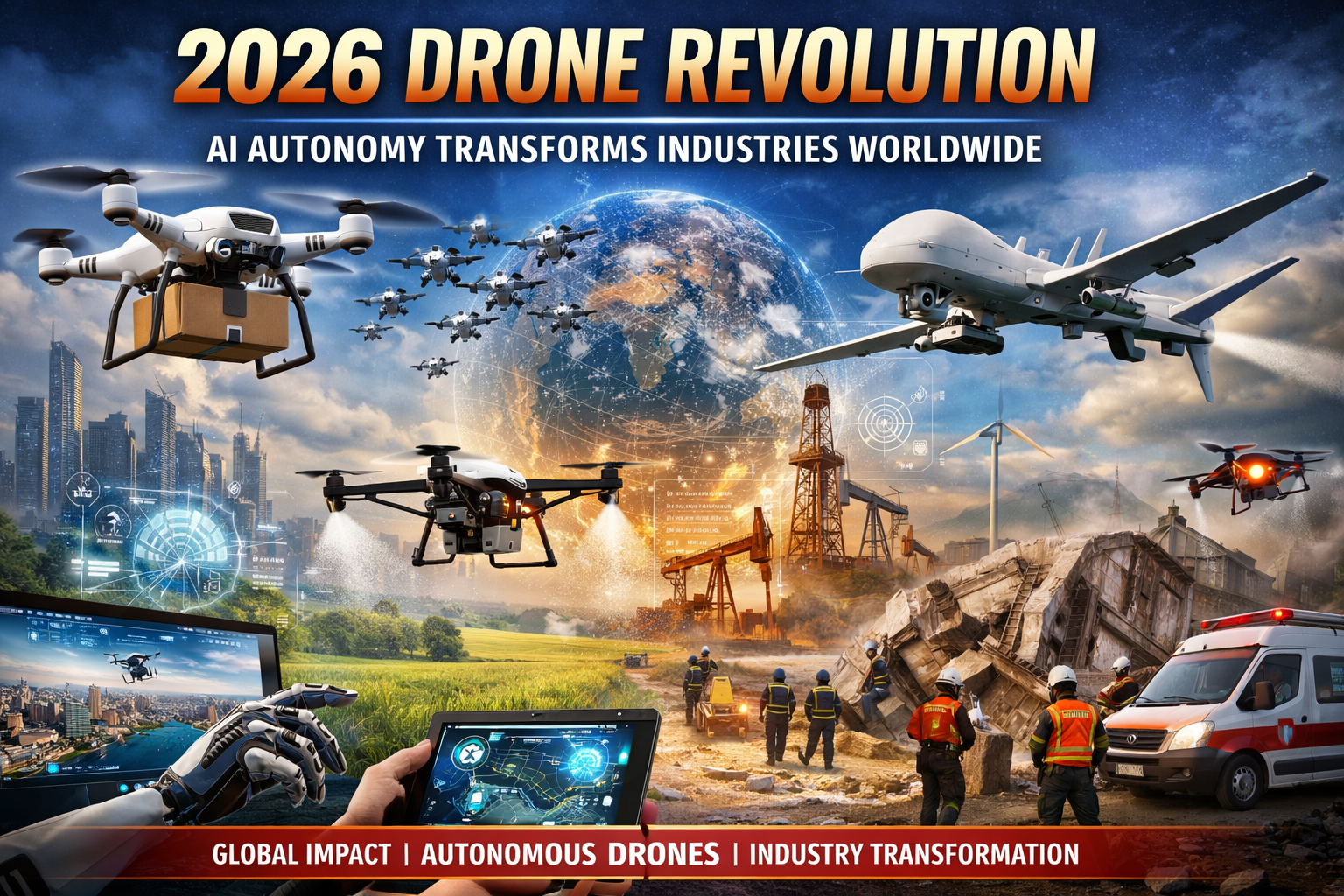
In 2026, the global drone landscape is experiencing a technological renaissance as artificial intelligence (AI) and autonomy propel unmanned aerial vehicles (UAVs) into mainstream industrial use far beyond recreational and basic commercial applications. What was once a niche tech has rapidly matured into a transformative force across sectors like logistics, agriculture, defence, emergency response, infrastructure monitoring, and public safety, fundamentally reshaping how societies operate and interact with the skies.
AI at the Helm of Drone Innovation
At the heart of this revolution is AI-driven autonomy enabling drones to make decisions on the fly without constant human control. With advanced onboard processors and edge AI systems, drones can now perceive their environment, avoid obstacles, navigate complex terrains, and coordinate in swarms with minimal latency. This autonomy leap is unlocking Beyond Visual Line of Sight (BVLOS) operations, facilitating tasks such as long-range surveying, delivery missions, and disaster response that were previously infeasible.
Industry reports indicate that the commercial drone market is poised for explosive growth through 2036, driven by autonomous and AI-enabled platforms that significantly increase operational scope and efficiency. These trends are projected to reshape entire supply chains and business models across the globe.
ndustrial Applications Redefined
- Logistics and Delivery
AI autonomy is turning yesterday’s experimental drone delivery concepts into operational reality. Drones equipped with smart routing and real-time obstacle avoidance are now capable of conductingautomated parcel deliveries in both urban and rural settings, bypassing traditional traffic constraints and reducing last-mile costs. - Agriculture and Precision Farming
Drones integrated with hyperspectral sensors and intelligent spraying systems are revolutionising farm management. Autonomous UAVs can now scan crops, detect plant health issues invisible to the naked eye, and apply targetedinterventions significantly boosting yields while minimising chemical usage. - Infrastructure Monitoring
Utility, energy, and transport companies are deploying autonomous drones to inspect power lines, pipelines, bridges, and railways. These drones conduct detailed data collection missions over extensive areas without human pilots, enhancing safety and operational efficiency. - Emergency Response & Safety
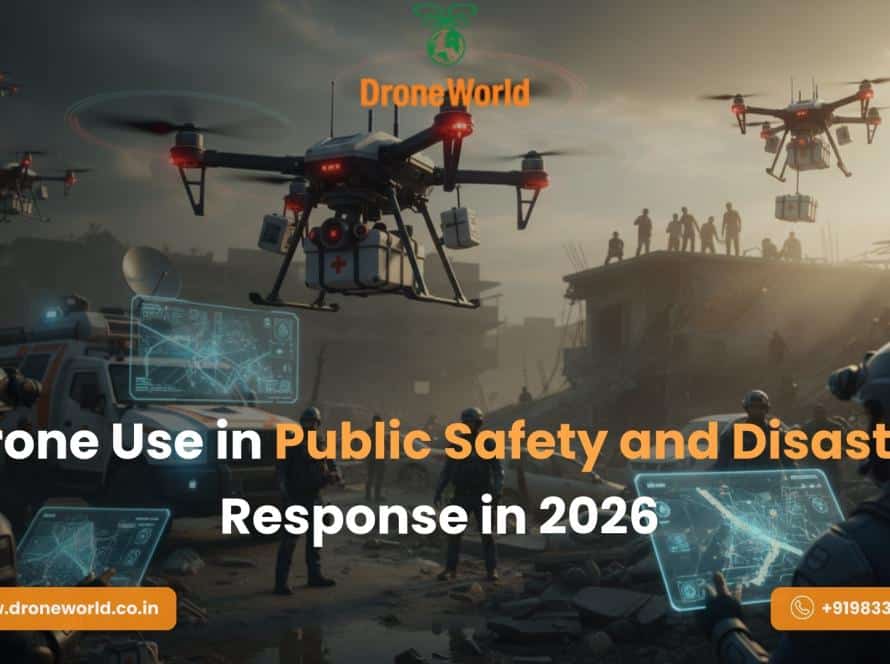
Swarm-capable drones with AI-guided coordination areemerging as powerful tools in search-and-rescue operations. By autonomously mapping disaster zones and relaying real-time situational data, these systems drastically reduce mission times and improve survival outcomes in critical situations.
Swarming and Cooperative Flight Patterns
One of 2026’s standout trends is the rise of autonomous drone swarms, where multiple drones operate synchronously, mimicking natural collective behaviours seen in bird flocks or insect colonies. These swarms enable large-scale coverage and resilience ideal for environmental mapping, wildfire tracking, and coordinated inspection tasks and are rapidly transitioning from research projects to deployed systems.
Regulatory Shifts and Safety Enhancements
Regulators worldwide are updating frameworks to safely integrate autonomous drone operations into civilian airspace. Improved detect-and-avoid systems, enhanced Remote ID protocols, and clearer BVLOS rules are enabling broader drone adoption while addressing privacy and safety concerns.
Challenges and Future Outlook
Despite rapid progress, challenges remain. Ensuring secure AI systems, preventing misuse, and establishing cohesive international norms are key priorities for governments and industry stakeholders alike. Ethical questions around autonomous decision-making particularly in defence or public safety contexts fuel ongoing debates about accountability and control.
Yet, the potential benefits are vast. As AI-driven drones become more capable and affordable, they will continue to push boundaries from delivering lifesaving medical supplies to monitoring critical infrastructure, and even supporting climate and environmental sensing missions.
In Summary
The 2026 drone revolution, powered by AI autonomy, marks a critical inflection point in the evolution of UAV technology. Once seen as futuristic gadgets, drones are now indispensable industrial platforms, unleashing new efficiencies, capabilities, and economic opportunities across the globe.